The Archive Folio
- June 8, 2026
- ByHope Gainer
There is a particular kind of homecoming that surprises you, one you did not know you were making until the moment it arrives — a sudden, overwhelming sense of recognition that transcends the ordinary pleasures of travel and touches something deeper, something ancestral. As someone of German descent, traveling to the country of my parental roots carried a resonance that went beyond tourism, a quiet, deeply personal thread woven through every cobblestone, cathedral, and candlelit dinner. Germany is a nation of spectacular complexity: ancient and avant-garde, stoic and sensual, meticulously ordered and thrillingly alive. Nowhere is this complexity more magnificently on display than in the extraordinary triptych of cities that form the country's great cultural triangle: Berlin, Hamburg, and Dresden. Each of these three urban masterpieces offers the discerning traveler an experience that is at once profoundly German and entirely singular, a testament to the extraordinary breadth and depth of a nation that has shaped the course of Western civilization.
These three magnificent metropolises could not be more different in spirit, yet together they compose a portrait of Germany that is complete, nuanced, and utterly captivating. Berlin, the capital, is Germany's largest city, a living monument to resilience, reinvention, and radical creativity, defined by its remarkable history, political significance, and the most vibrant, diverse cultural scene in the country. Hamburg, the second-largest city, is the elegant port at the country's northern edge, a place shaped by centuries of maritime heritage and breathtaking modern ambition. And Dresden, the most Baroque city in Germany, known as the "Florence on the Elbe," is a city of golden spires, operatic grandeur, and extraordinary resurrection, its restored architecture among the most ravishing in all of Europe. Each sits at a distinct point on the map, and on the spectrum of human experience. They are, conveniently and beautifully, connected by swift and comfortable rail, making the journey between them as pleasurable as the destinations themselves. To travel this triangle is to understand Germany in all its layered, luminous complexity — a journey that no serious traveler should forgo.
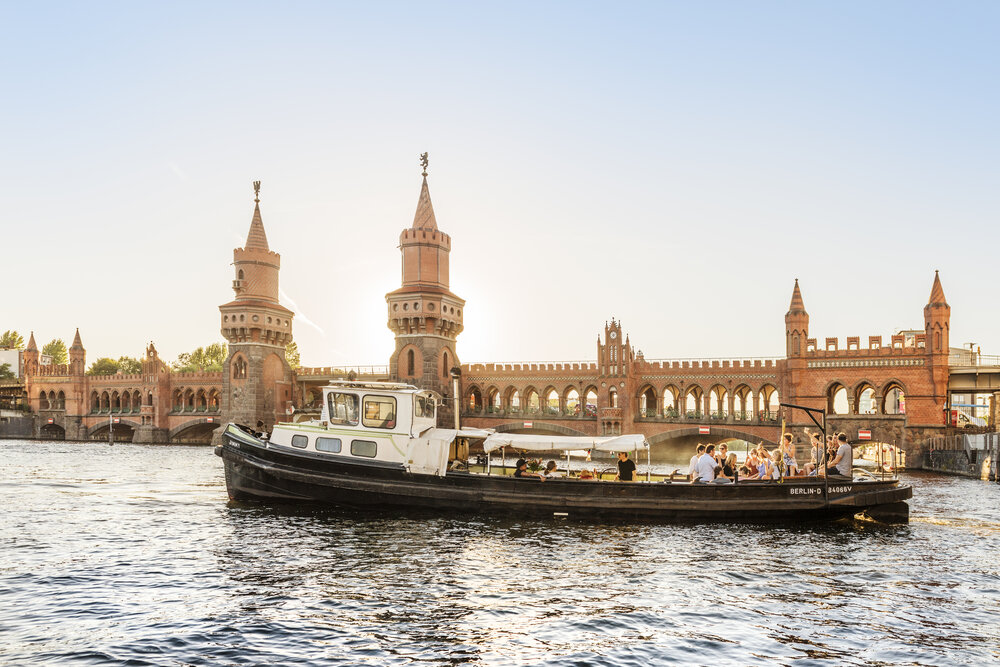
Spree River, Photo: Visit Berlin, by Oberbaum
Berlin: Capital and Culture — Where History Breathes and the Future Roars. To enter Berlin is to step into a city that exists in a perpetual state of becoming, a place where the weight of history and the energy of reinvention collide with a force that is almost physical. Germany's capital demands attention not through conventional beauty but through an unmistakable gravity, an urban charisma that draws the world's most creative and restless spirits to its wide boulevards and hidden courtyards alike. For the luxury traveler, Berlin offers something rare: a genuine cultural frontier, a city where the most exciting things are happening not in established temples of taste but in the spaces between, where the old world and the new negotiate their uneasy, thrilling coexistence. It is a city that refuses to be confined by expectation, that rewards the curious and the bold, and that delivers, to those who engage with it on its own terms, an experience of urban vitality that is unmatched anywhere in Europe today.
Berlin is not a city so much as a force of nature. It arrives at you, visceral, vast, and unapologetically itself. Germany's capital and its largest city with a population of 3.8 million, Berlin sprawls across a geography both surprising and seductive: roughly one-third of its surface is green space, laced with parks, forests, and the sinuous shimmer of the River Spree. On a golden afternoon, when light fractures across the water and cyclists weave through the Tiergarten, it is possible to forget that this is one of the great capitals of the world. Yet this greenery is no accident — it is woven into the city's DNA, a reminder that Berlin has always found ways to breathe, even in its most turbulent chapters, and that its greatest luxury may well be the space it affords for contemplation and repose. For the visitor accustomed to the density of Paris or London, Berlin's spaciousness comes as a revelation — a city that gives you room to think, room to wander, room to lose yourself productively.
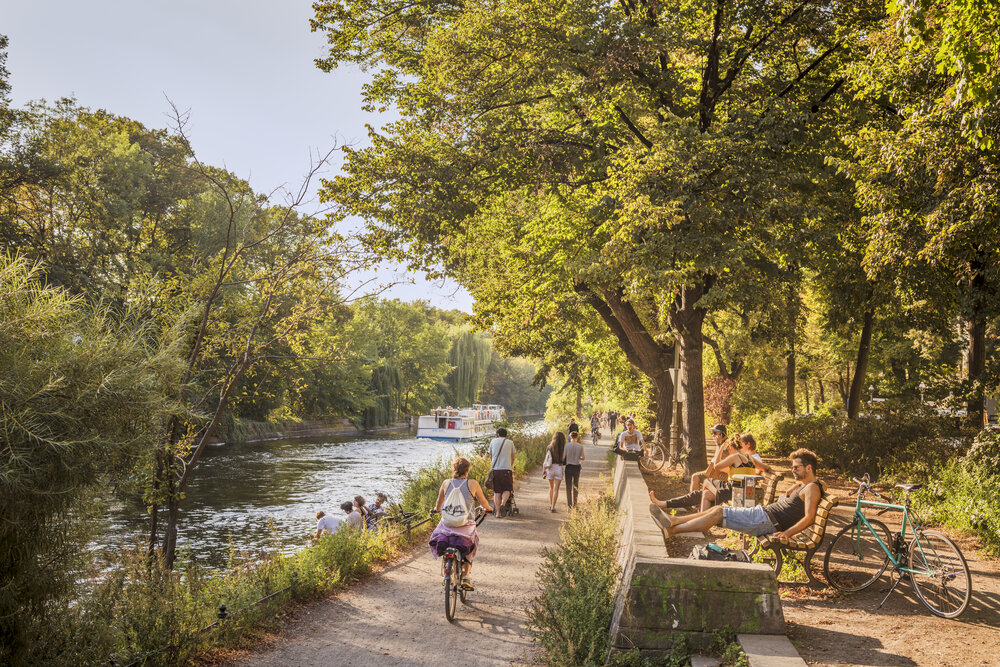
Landwehr Canal Photo: Visit Berlin
And yet history is never far. Berlin carries its past with a rare combination of courage and candor that sets it apart from almost any other European capital. The Berlin Wall Memorial stands as one of the most affecting monuments in Europe, not merely a remnant of concrete, but a testament to division, longing, and ultimately triumph — a place where the visitor can feel the full, terrible weight of ideological separation and the exhilarating liberation of its collapse. Nearby, the Brandenburg Gate, that sublime Neoclassical portal, remains the defining symbol of German reunification and one of the most photographed landmarks on the continent. It is, in person, rather more magnificent than any photograph can convey, its columns rising with a dignity and proportion that no image has ever fully captured. Berlin does not sanitize its history or package it for comfortable consumption; it presents it raw and demanding, and in doing so, offers the thoughtful traveler an encounter with the past that is as intellectually bracing as it is emotionally powerful.
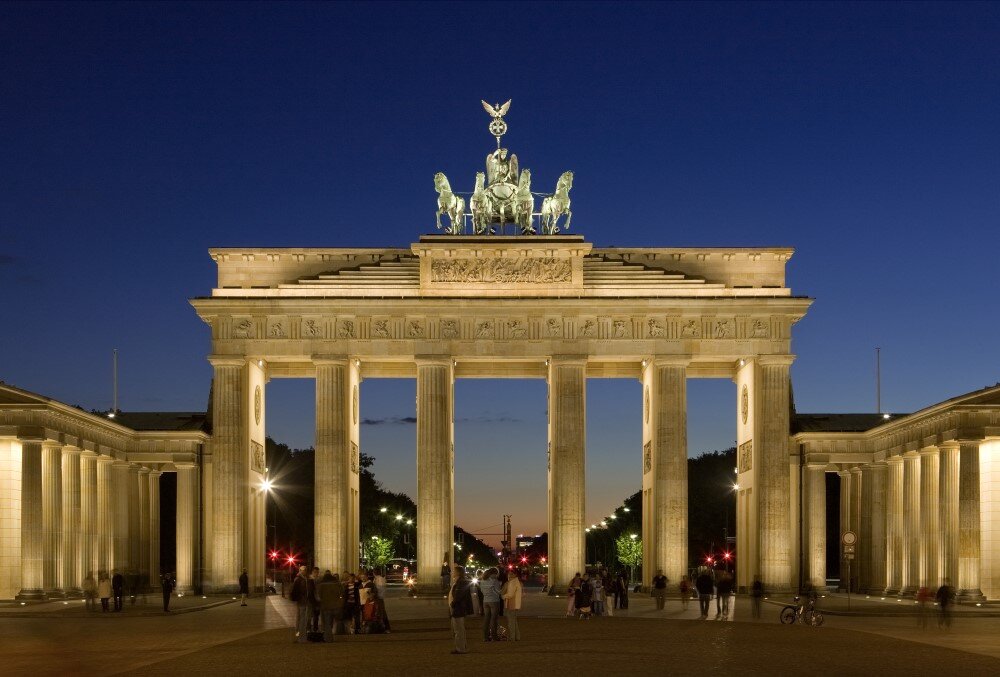
Brandenburg Gate, Photo: VIsit Berlin, by Schlolvien
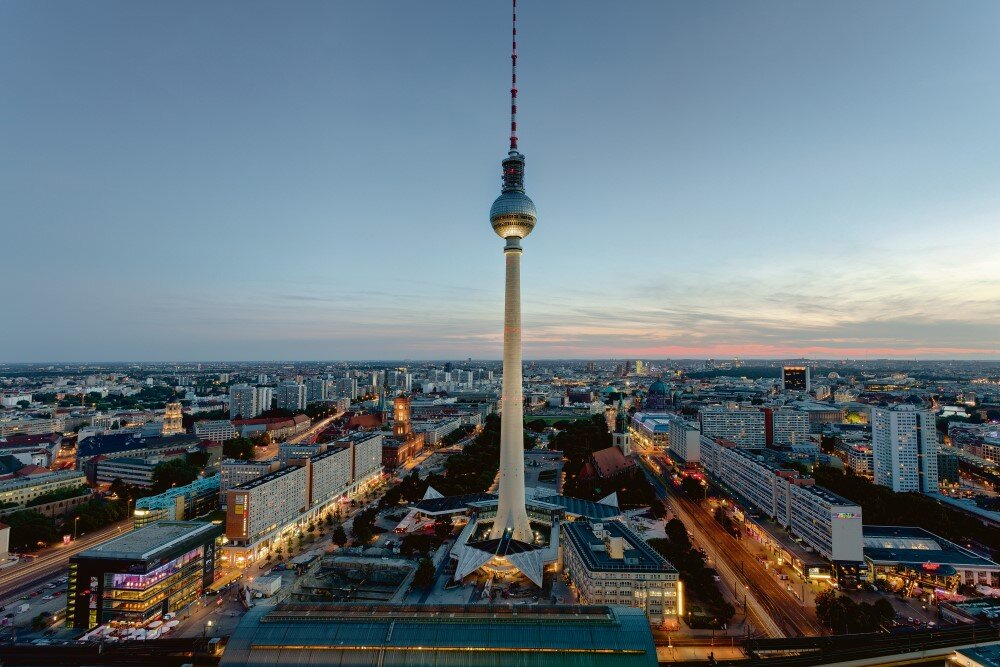
Berlin Panorama Photo: Visit Berlin by Schlosvien
The Reichstag Building, home to the German Parliament, dazzles with its breathtaking modern glass dome, designed by Sir Norman Foster, which visitors may ascend for a panoramic encounter with the city's rooftops and skyline — an experience that is both visually spectacular and symbolically profound, as the transparency of the architecture mirrors the transparency of the democracy it houses. Museum Island, a UNESCO World Heritage Site anchored in the Spree, gathers five world-class museums including the Pergamon and the Altes Museum into a cultural campus of almost incomprehensible richness, where civilizations spanning millennia are housed within steps of one another. The Memorial to the Murdered Jews of Europe, a field of 2,711 concrete stelae that shifts and disorients as you move among them, is among the most powerful works of memorial architecture in the world — a place that every visitor to Berlin must experience, however difficult, for it embodies the city's unflinching commitment to truth.
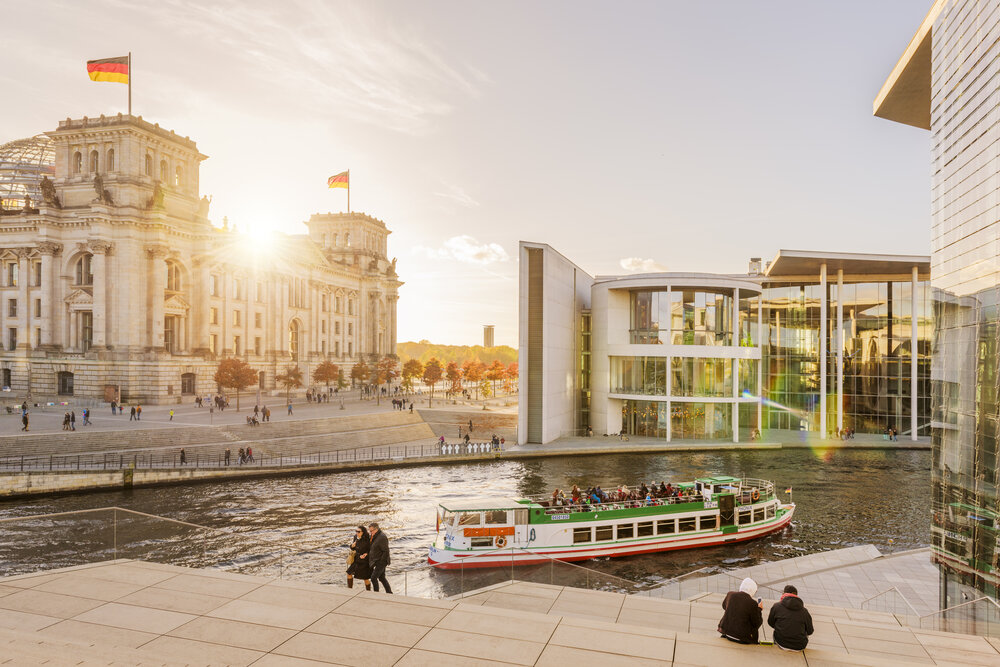
Spree River Photo: Visit Berlin by Dagmar Schwelle
Berlin's food scene is as eclectic and unclassifiable as the city itself — a culinary landscape where the rarefied and the raucously democratic coexist with an ease that feels uniquely Berliner. From Michelin-starred temples of New German cuisine, where chefs reinterpret the traditions of Prussian and Saxon cookery with breathtaking inventiveness, to legendary Turkish döner kebab stands operating since before reunification, the city feeds its residents and visitors with a generosity that knows no class distinction. Art galleries occupy former power stations; cocktail bars inhabit Cold War bunkers. Getting around is a pleasure: Berlin's public transport system is among the finest in Europe, a seamless network of U-Bahn, S-Bahn, trams, and buses that render the entire city effortlessly navigable, connecting every neighborhood, every gallery, every hidden gem with a reliability and frequency that makes the car feel not merely unnecessary but faintly absurd. The city's democratic spirit extends to its dining tables, where the extraordinary and the everyday sit side by side without hierarchy.
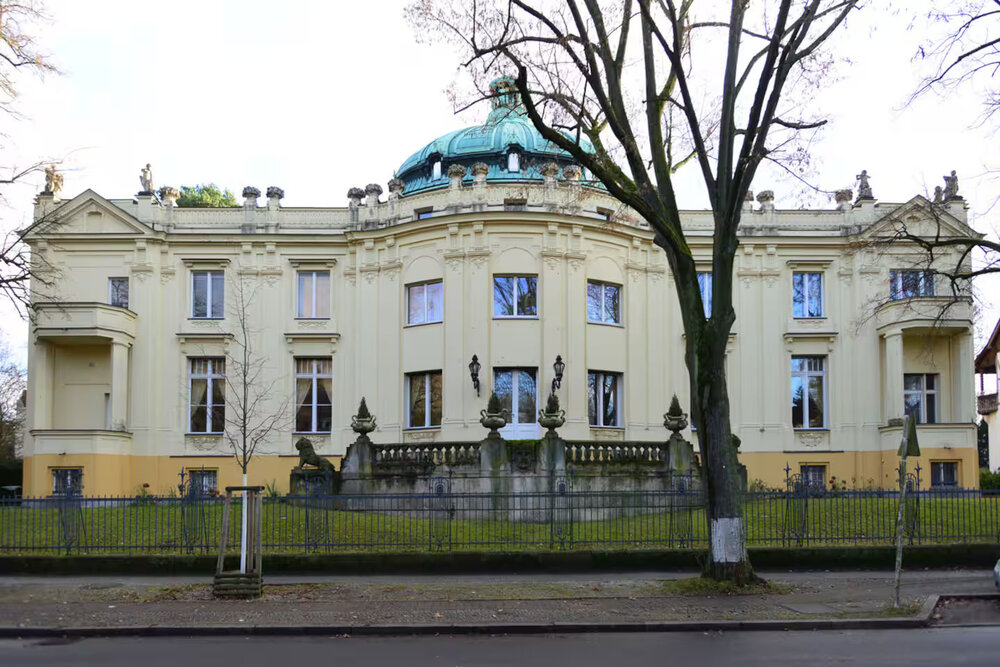
Löwenpalais Photo: Starke Foundation
A Palace for the Privileged Few: The Löwenpalais — For the traveler who seeks not merely accommodation but an experience that lingers in the memory long after departure, Berlin offers a residence of extraordinary distinction. The Löwenpalais, or Lion's Palace, is not a hotel in any conventional sense but rather a private world of art, history, and cultural vitality available to a select few. It represents the kind of singular, insider experience that the most discerning travelers crave — one that cannot be booked through ordinary channels and that transforms a stay in Berlin from exceptional to unforgettable. In a city renowned for its creative energy and cultural reinvention, the Löwenpalais offers something more precious still: the chance to inhabit that creativity rather than merely observe it, to live inside Berlin's artistic soul rather than visit it from the outside, and to carry away an understanding of the city that no conventional hotel stay could ever provide.
My own Berlin was lived, with great fortune, inside one of the city's most storied addresses: the Löwenpalais. This magnificent 19th-century palace, its name translating elegantly as "Lion's Palace," sits at the heart of the Grunewald, Berlin's most prestigious residential quarter, an enclave of forest villas and lakeside lanes that has long been home to the city's most distinguished families. The palace is today the domain of my dear friend Jörg Starke, who has transformed it into something entirely singular: a living cultural institution, home to a celebrated 'Artists in Residence' program that draws painters, sculptors, and creatives from around the world, as well as one unique private apartment available exclusively to a small number of discerning guests. To secure a stay here is to gain access to a Berlin that most visitors never know exists — a Berlin of private collections, artistic salon conversations, and the kind of intimate cultural encounters that no amount of money or planning can otherwise arrange.
To stay at the Löwenpalais is to inhabit history. High ceilings, original architectural details, and the quiet gravitas of genuine heritage envelop you from the moment you arrive, creating an atmosphere that is simultaneously imposing and deeply welcoming. And yet the palace pulses with creative vitality, works in progress in the studios, conversation and collaboration drifting through the corridors and vernissages to unveil the works — a living, breathing intersection of past and present that gives the experience its distinctive magic. It is a place where the grandeur of 19th-century aristocratic life meets the restless creative energy of the 21st century, and where both are enriched by the encounter. The artists who pass through its studios leave traces not only on the walls but in the atmosphere itself, so that the palace feels perpetually alive, perpetually in the process of becoming something new while remaining firmly rooted in its extraordinary past.
"To stay at the Löwenpalais is to inhabit history, and to feel, in the company of art and friendship, that the present is equally magnificent." This sentiment, shared by a fellow guest during an evening of conversation in the palace's drawing room, captures the essence of what makes this place so extraordinary. It is not merely that the Löwenpalais offers luxurious accommodation in a historic setting — though it certainly does that with effortless grace — but that it creates a context in which the ordinary boundaries between past and present, between visitor and resident, between observer and participant, dissolve entirely. Here, one does not merely observe Berlin's cultural life; one is invited inside it. The palace accomplishes something that no hotel, however luxurious, can achieve: it makes you feel not like a guest who has been accommodated but like a participant who has been welcomed, a temporary resident of Berlin's creative and intellectual life rather than a transient visitor to it.
Visit Berlin by Dagmar Schwelle
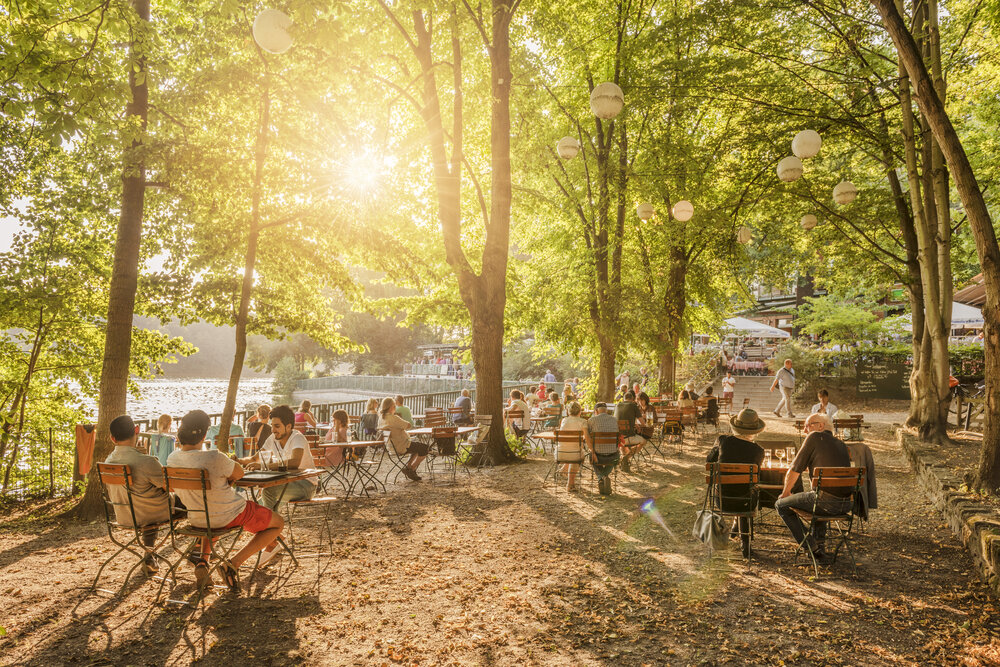
The surrounding Grunewald district rewards extended exploration with the kind of quiet, sustaining pleasures that distinguish a truly memorable journey from a merely pleasant one. The Grunewald Forest, a vast, cathedral-like expanse of woodland and glacial lakes, is ideal for long morning walks that clear the mind and refresh the spirit, for jogging along its shaded paths, or simply sitting lakeside with a grilled bratwurst from one of the charming local stalls — an experience of authentic Berliner Gemütlichkeit that no restaurant, however fine, can replicate. En route to the forest, the Wiener Conditorei beckons irresistibly: a Viennese-style coffee house of old-world elegance, perfect for a slow espresso and a slice of something dangerously good, a pause that will recalibrate your entire day. These are the rhythms of local life that the Löwenpalais grants you access to — not the curated attractions of tourism but the genuine, sustaining pleasures of the neighborhood that the palace's residents have enjoyed for generations.
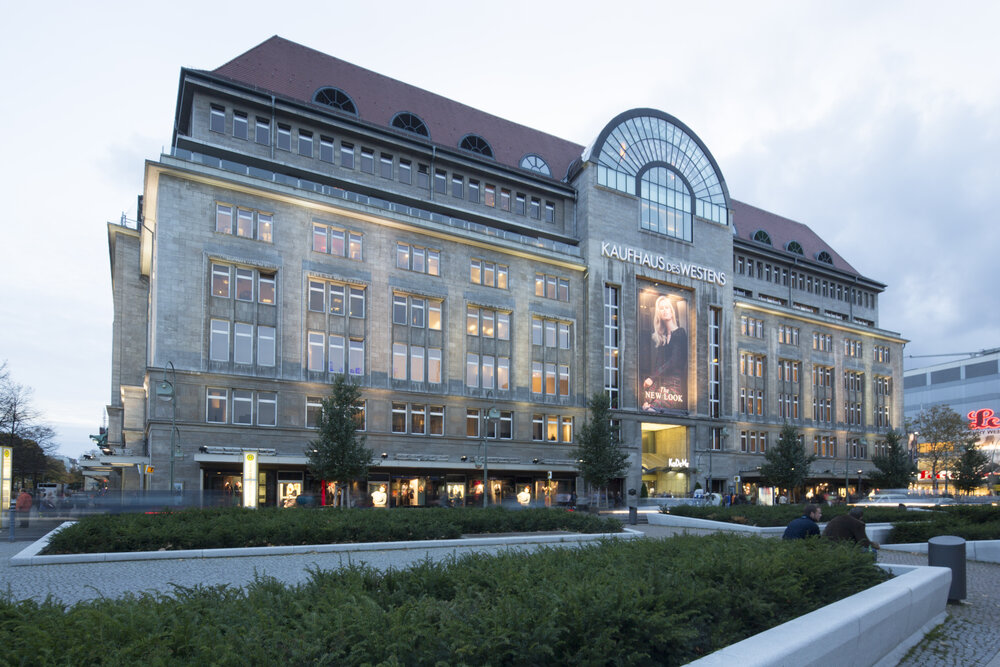
Kurfürstendamm Shopping Boulevard Photo: Visit Berlin by Kierok
Back in the urban Grunewald, the Kurfürstendamm, Berlin's legendary luxury shopping boulevard, known simply as the Ku'damm, unfurls with flagships and fashion houses in a display of commercial grandeur that has defined west Berlin elegance for more than a century. Its crown jewel is the iconic KaDeWe department store, one of the largest and most magnificent in Europe, a building so lavishly stocked it could sustain a small civilization. A particular discovery not to be missed: the wine and spirits department hosts a complimentary "happy hour" tasting that is anything but ordinary, offering access to vintages and labels that would make an oenophile weep with gratitude. I found myself there with my Berliner friend Catherina, glasses of fine bubbly in hand, toasting the weekend ahead, a perfectly effervescent way to begin one's Berlin adventures — and a reminder that the greatest luxuries are often those that come unexpectedly and without price.
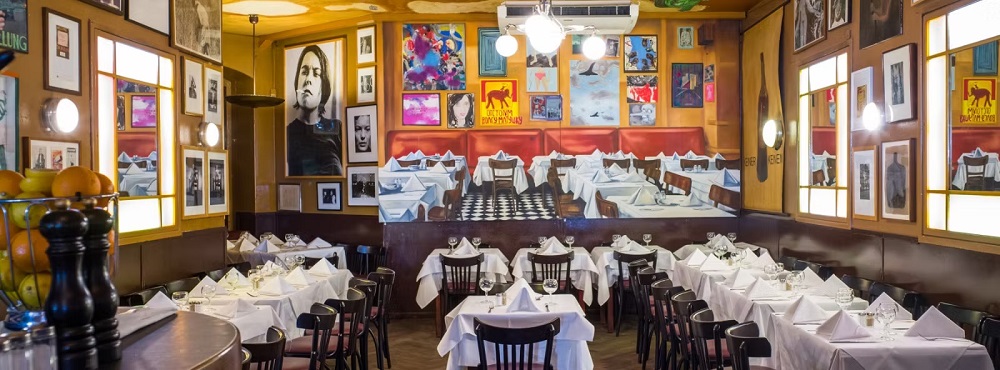
Paris Bar Photo: Paris Bar
Jörg also introduced me to Aspria Berlin Ku'Damm, the city's most exclusive wellness club, where the city's high achievers work body and mind in equal measure — a sanctuary of vitality and refinement tucked behind an unassuming façade that yields one of Berlin's most indulgent self-care experiences. And then there is the legendary Paris Bar, that wonderfully timeless Charlottenburg institution where artists, diplomats, and eccentrics have convened for decades beneath walls hung with a rotating gallery of contemporary art. We dined there in splendid celebration of Jörg's birthday, surrounded by the bar's famous art-hung walls, the hum of conversation and the clink of fine wine glasses creating an atmosphere that is at once cosmopolitan and intimately convivial. I cannot imagine a more fitting venue for such an occasion — a place where every dinner feels like an event and every event feels like a celebration of life itself, where the boundaries between restaurant and salon and gallery dissolve into something richer than any single category could contain.
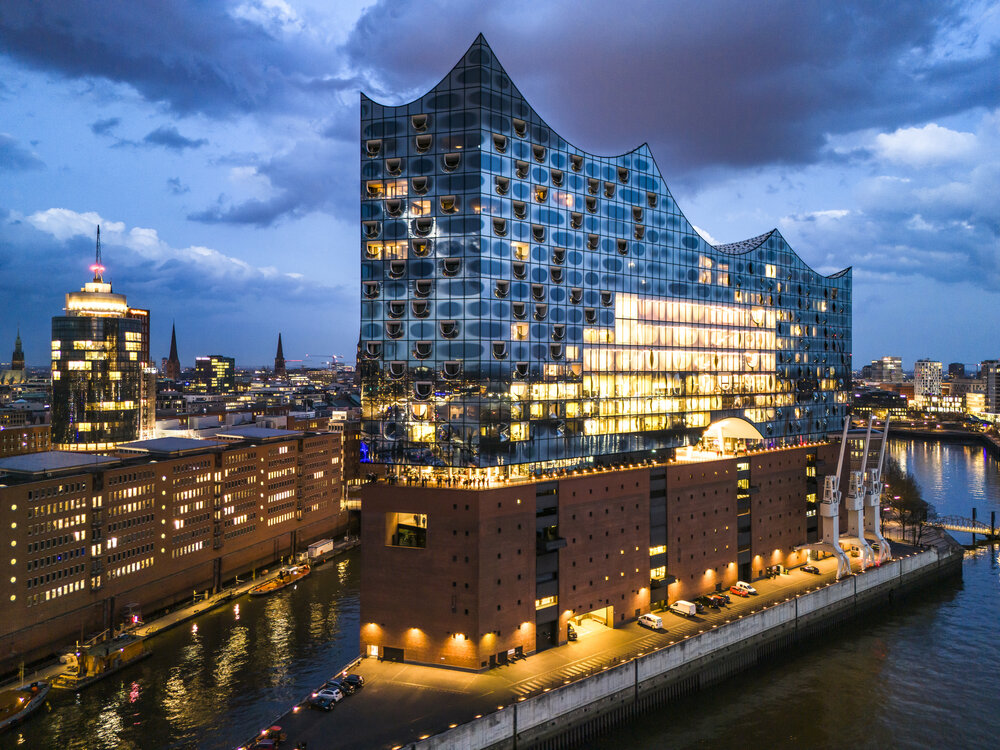
Elbphilharmonie Photo: Hamburg Tourism by Thies Raetzke
Hamburg: Maritime and Modern — The City That Sails and Soars. If Berlin is the rebel, Hamburg is the patrician — assured, elegant, and quietly spectacular in a manner that rewards the visitor who takes the time to look beneath its polished surface. Germany's second-largest city and its greatest port, Hamburg occupies a position at the mouth of the Elbe with the confident ease of a place that has always known its own worth, and for the luxury traveler, it offers an experience of urbane sophistication and maritime grandeur that is unmatched anywhere in northern Europe. There is a quality to Hamburg that distinguishes it from every other German city: a cosmopolitan ease born of centuries of global trade, a civic pride that expresses itself not in monuments but in the quality of daily life, and an architectural ambition that has produced some of the most remarkable contemporary buildings in Europe.
If Berlin is the rebel, Hamburg is the patrician, assured, elegant, and quietly spectacular. Germany's second-largest city and its greatest port, Hamburg occupies a position at the mouth of the Elbe with the confident ease of a place that has always known its own worth. For centuries it was one of the most important trading cities in the world, a member of the medieval Hanseatic League whose merchant princes built fortunes on commerce with every corner of the globe. That maritime heritage infuses the city still, in its architecture, its atmosphere, and its particular brand of understated, cosmopolitan sophistication — a quality that manifests not in ostentation but in a quiet certainty of taste and an innate sense of proportion that makes Hamburg one of Europe's most agreeable and livable great cities. The harbor remains the city's beating heart, and the sight of container ships sliding past waterfront promenades provides a constant reminder that Hamburg's elegance is not decorative but functional — the elegance of a place that works.
The skyline of Hamburg is defined by its church spires and, increasingly, by the soaring, wave-like form of the Elbphilharmonie, the concert hall that has become, since its 2017 opening, one of the architectural sensations of Europe, designed by the renowned Swiss firm Herzog & de Meuron. Perched on the banks of the Elbe, its glass upper structure rising dramatically from the red-brick base of a former warehouse, the Elbphilharmonie is both a venue of world-class acoustic excellence and a public landmark open to all — a democratic gesture that is characteristic of Hamburg's best instincts. The panoramic Plaza at its summit offers one of the finest views in northern Germany, the harbor, the river, and the rooftops of the city spread out in every direction, and admission is free. One does not simply visit the Elbphilharmonie; one is enthralled by it, swept up in the audacity of its conception and the perfection of its execution.
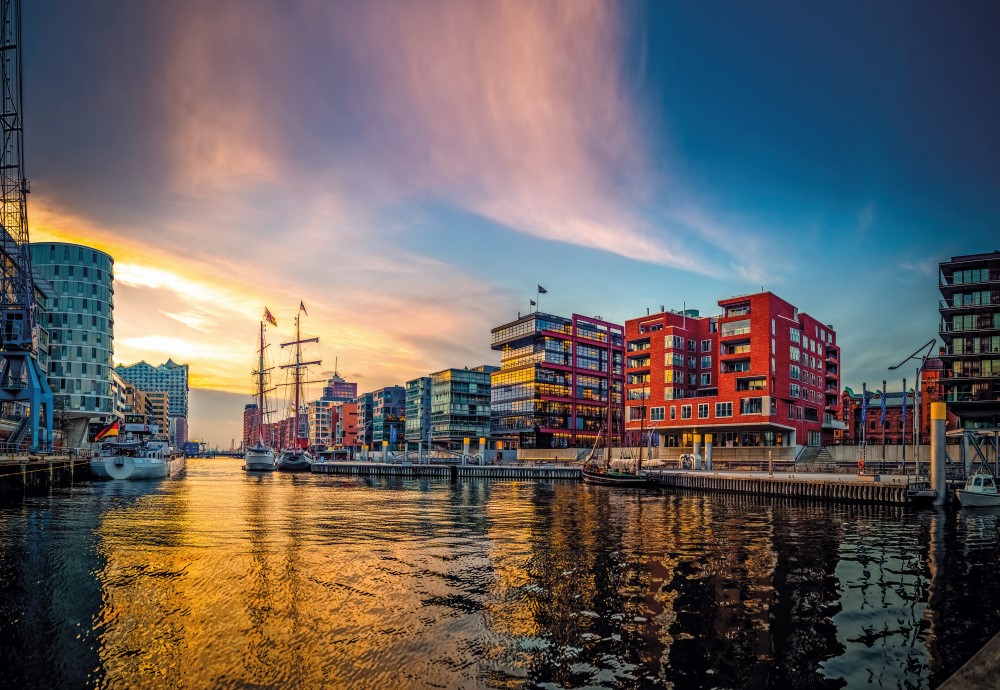
HafenCity Photo: Hamburg Tourism by Ingo Boelter
HafenCity, the ambitious urban development district surrounding the Elbphilharmonie, represents Hamburg at its most forward-thinking, a former industrial port reborn as a mixed-use waterfront neighborhood of striking contemporary architecture, galleries, design hotels, and restaurants that signal the city's confident engagement with the future. Alongside it, the historic Speicherstadt, the world's largest warehouse district and also a UNESCO World Heritage Site, offers labyrinthine canals and red-brick grandeur that reward an afternoon of wandering with discoveries at every turn — the kind of atmospheric, photogenic district that makes the serious photographer reach for their camera and the casual stroller simply slow down and smile. Hamburg's central shopping streets, including the elegant Neuer Wall with its luxury boutiques and the bustling Mönckebergstraße, provide ample reason to refine one's wardrobe, offering a retail experience that combines German precision with international flair. Together, these districts embody Hamburg's genius for combining heritage with innovation in a way that feels organic rather than forced.
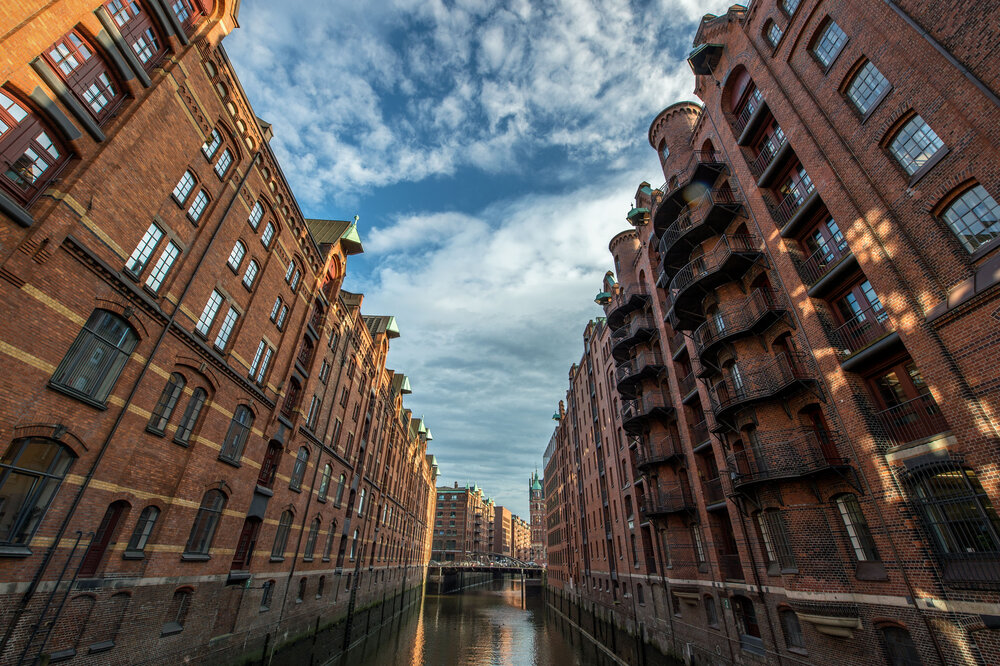
Speicherstadt Photo: Hamburg Tourism by Christian Pahrbier
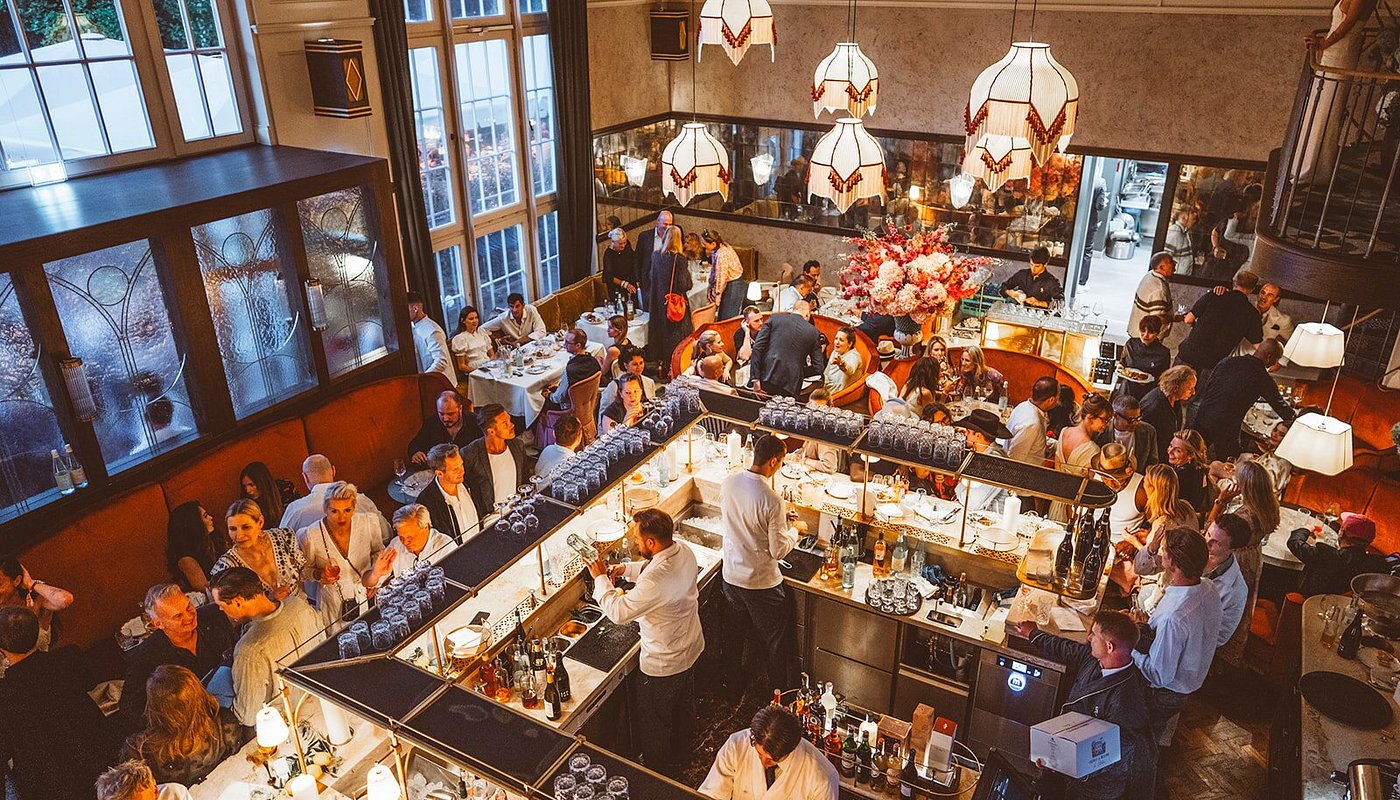
Pellicano Restaurant Photo: Pellicano Restaurant
An Evening of Reunion: Pellicano at the Casino, Stephansplatz — Some restaurants merely feed you; others create the conditions for something more meaningful to unfold. The Pellicano Restaurant, housed within the magnificent Casino at Stephansplatz, belongs firmly in the latter category — a dining destination that understands its role as the stage upon which the most memorable evenings of one's travels are performed, a place where the interplay of exquisite food, magnificent surroundings, and genuine human connection achieves a kind of quiet transcendence. In a city that prizes understatement, the Casino at Stephansplatz is an exception that proves the rule: a building of genuine grandeur that creates, within its gilded rooms, an atmosphere of occasion that elevates every meal into something ceremonious without ever tipping into the theatrical. The Pellicano, with its Italian soul and Hamburg address, achieves a fusion of Mediterranean warmth and Northern European formality that is as distinctive as it is delightful.
One evening in Hamburg transcended the merely pleasurable and became something memorable. At the Casino at Stephansplatz, inside the magnificent space that houses the Pellicano Restaurant, I sat down to dinner with my dear German friend Renate, for a reunion that the setting made feel almost preordained. Pellicano is one of those rare restaurants that seems to understand precisely what a restaurant is for, not merely the nourishment of the body, but the celebration of life and connection — a place where the elegance of the room, the quality of the cuisine, and the warmth of the service conspire to create an atmosphere in which the most important things can be said, and heard, and remembered. The restaurant's Italian heritage, evident in both its cuisine and its temperament, brings a Mediterranean warmth to the North German formality, producing an atmosphere that is at once refined and deeply comfortable — the kind of setting in which conversation flows as naturally as the wine.
"Where old friends meet young lovers and mingle in joyful groups, in an atmosphere perfectly suited to the grand building — a truly fantastic choreography of joie de vivre." This description, which I encountered on the restaurant's own materials, captured the evening with a precision that surprised me, for it was exactly what we experienced: a room alive with the pleasure of companionship, where every table seemed to host its own small celebration, and where the grandeur of the setting elevated every conversation and every dish into something ceremonious and fine. It is a restaurant that understands the alchemy of hospitality — the transformation of a meal into a memory, of an evening into an event, of a gathering into a celebration. The Pellicano achieves something that many grander restaurants fail to accomplish: it makes every guest feel not merely served but attended to, not merely accommodated but genuinely welcomed.
The food was superb, the room magnificent, and the evening, as all great evenings do, seemed to expand and slow, as if time itself had agreed to be generous — granting us hours that felt like a gift rather than a duration. Each course arrived with the confident elegance that marks a kitchen at the height of its powers, and the wine flowed with the kind of effortless generosity that transforms a dinner from satisfying to sublime. I left Pellicano reminded, as Hamburg so reliably reminds one, that the good life is most vividly lived in the company of those we like and care about — and that a truly great restaurant knows this instinctively and builds everything else around that essential truth. It was an evening that distilled, into a few perfect hours, everything that makes Hamburg such a civilized and rewarding city: its appreciation for quality, its gift for occasion, and its quiet conviction that the finest pleasures are those shared with people one loves.
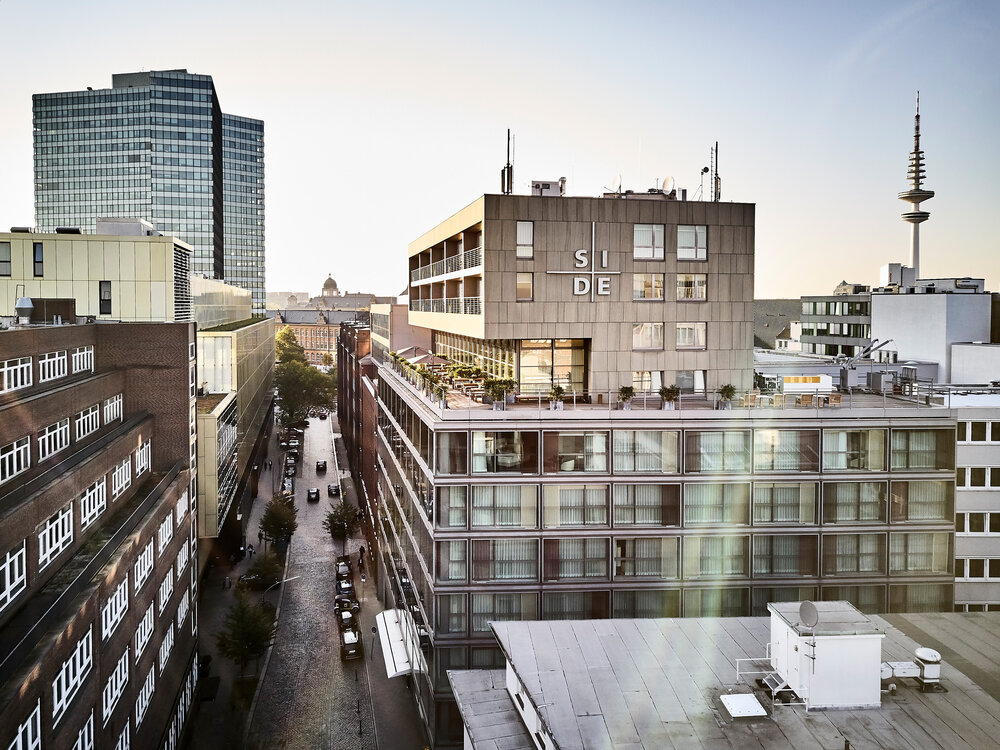
Side Hotel Exterior Photo: Side Hotel
Side Hotel: Design at the Heart of the City — For the traveler who demands both aesthetic distinction and absolute convenience, the Side Hotel offers a combination that is difficult to surpass. This design-forward five-star property embodies the contemporary Hamburg spirit: sophisticated without stiffness, modern without coldness, and perfectly positioned to serve as a launchpad for every aspect of the city's considerable charms. It is the kind of hotel that understands its role not merely as a place to sleep but as an integral part of the travel experience itself — a statement about the values and sensibilities of the city it calls home. In Hamburg, where the design sensibility is particularly refined and the expectation for quality especially high, the Side manages to exceed the standard, offering a stay that feels not merely comfortable but genuinely stylish, an environment that stimulates and soothes in equal measure and that makes every return to the hotel feel like coming home.
My Hamburg residence was the Side Hotel, and I could not have chosen better. A design-forward five-star property that occupies a beautifully conceived building just steps from the city center, the Side places virtually everything of significance within walking distance: the Binnenalster lake with its swan-dappled waters and evening light, the shopping streets with their tempting array of international and local boutiques, and the Rathaus, that magnificent Neo-Renaissance city hall that stands as one of Hamburg's most imposing and beloved landmarks. The hotel's location alone would justify its recommendation, but it is the property itself — its style, its service, its quiet confidence — that makes it truly exceptional. From the moment one enters the dramatic atrium lobby, it is clear that this is a hotel designed not to impress but to delight, and the distinction between those two ambitions is felt in every subsequent moment of the stay, from the efficiency of check-in to the comfort of the pillow.
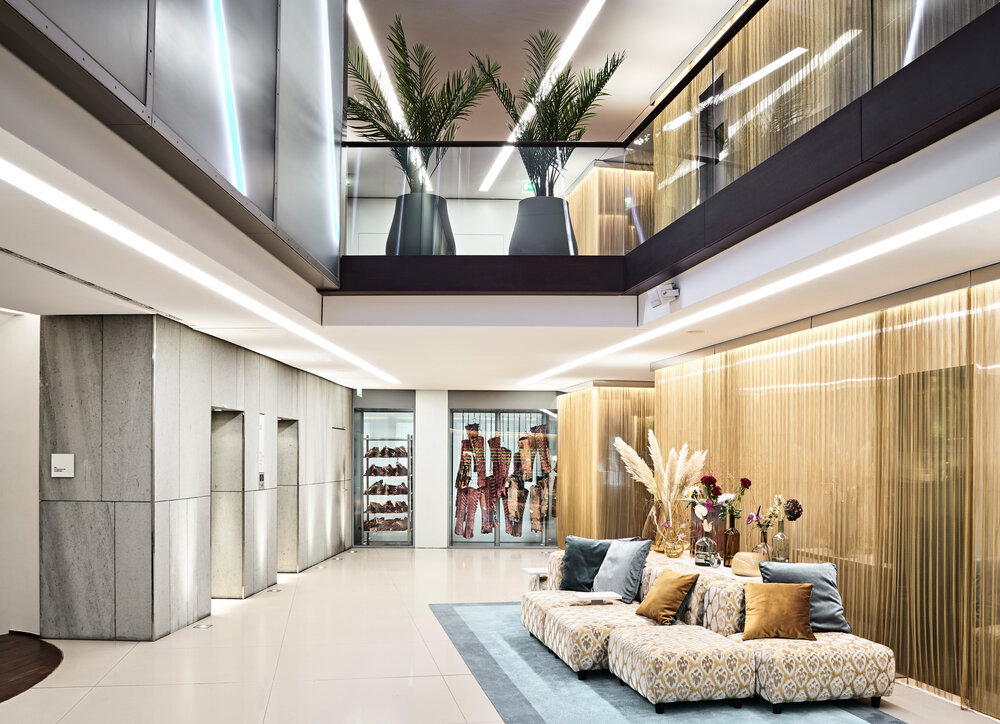
Side Hotel Lobby Atrium Photo: Side Hotel
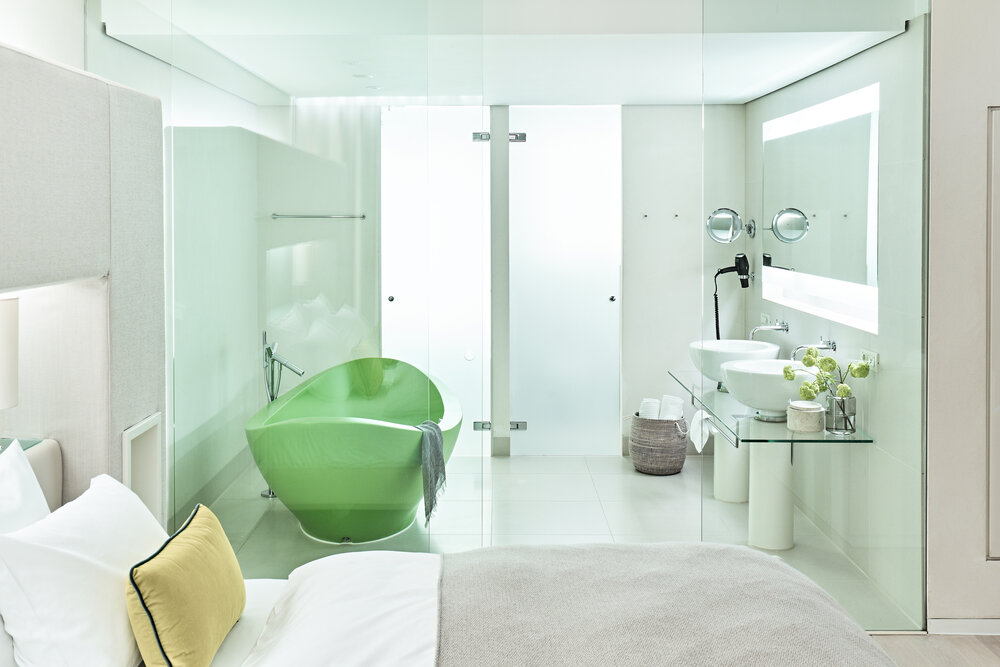
Side Hotel Suite Photo: Side Hotel
The façade of natural stone and glass leads into the super tall atrium lobby space with ever-changing lighting effects that create an atmosphere of dynamic sophistication, a space that shifts in mood and character throughout the day and into the evening. Milanese interior designer Matteo Thun created cool, contemporary guest rooms with a splash of color — and here one must specifically note the bathtubs, which are objects of genuine design distinction that transform the humble act of bathing into something approaching an aesthetic event — complimenting the exterior by Hamburg architects Jan Störmer Architekten. The result is a building that feels simultaneously of its place and ahead of it, rooted in Hamburg's tradition of mercantile excellence while projecting a vision of contemporary luxury that is unapologetically forward-looking. It is architecture that respects its context without being enslaved by it, and that uses light, space, and material to create an environment that feels both stimulating and deeply comfortable.
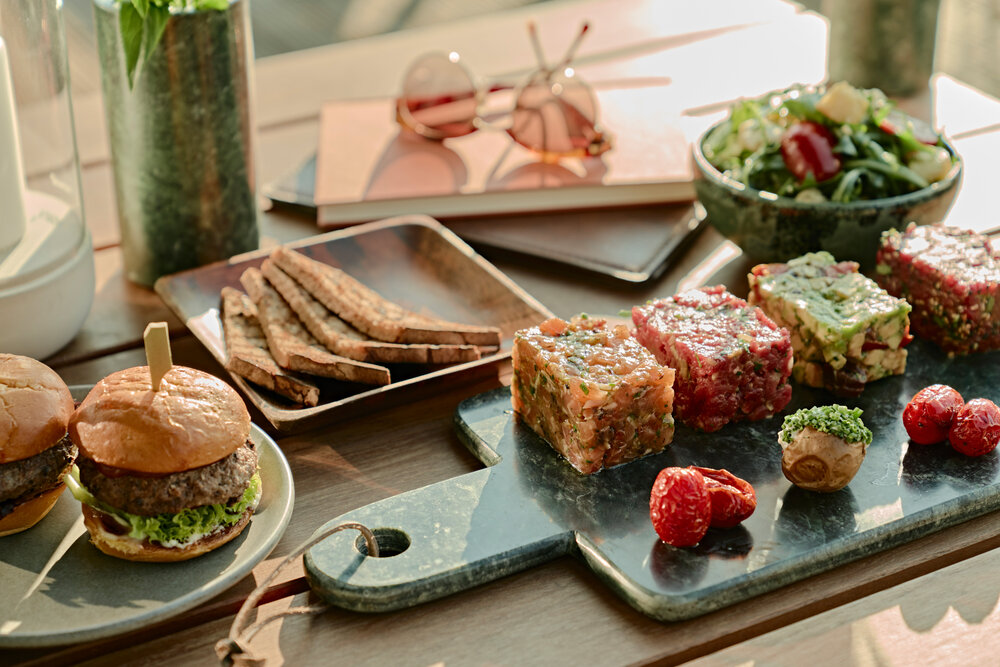
Side Hotel Snacks Photo: Side Hotel
Breakfast buffets give a hearty start to the day with a spread that exemplifies the German talent for making the first meal of the day feel like an occasion — cold cuts of exceptional quality, freshly baked breads and pastries that would make a Viennese baker nod in approval, and eggs prepared to precise specification. But it is at dinner that the Side's culinary credentials truly shine, for the [m] eatery serves what is arguably the best steak in Hamburg, featuring in-house dry-aged meats sourced from Argentina, the United States, and Europe, each cut selected and aged with the kind of obsessive attention that separates a good steakhouse from a great one. For the carnivorous traveler, this alone is worth the stay. The [m] eatery understands that a great steak is not merely a matter of sourcing — it requires the right aging, the right temperature, the right rest, and the right moment of service, all of which are executed here with a precision that borders on the artistic.
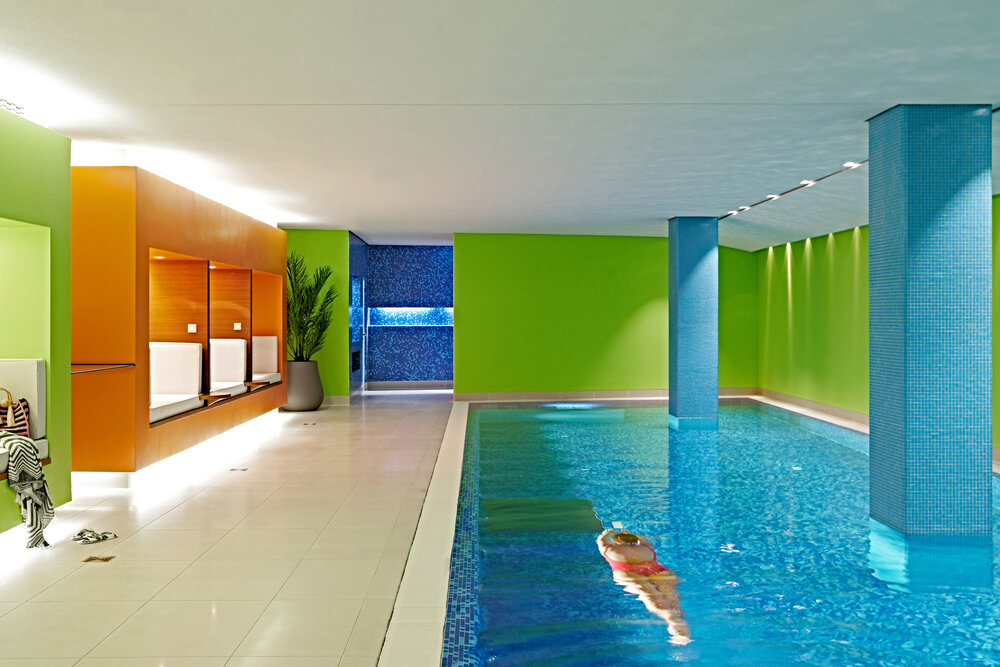
Side Hotel Pool Photo: Side Hotel
The hotel's spa and indoor pool offered a welcome retreat after days of exploration — a tranquil, light-filled space where the accumulated fatigue of museum-going, church-climbing, and street-wandering could be dissolved in mineral-rich waters and expert hands. And the upper-level outdoor terrace, from which the rooftops of Hamburg spread in all directions beneath open sky, became my preferred venue for the ritual of the evening aperitivo, a daily ceremony that I came to anticipate with the eagerness usually reserved for far more elaborate entertainments. The Botanist Bar, with its expertly crafted cocktails and atmosphere of refined conviviality, provided the perfect companion to this elevated vantage point, creating a sense of occasion that made each evening feel like a private celebration of the city below. These are the amenities that elevate a hotel from functional to memorable — not luxuries for their own sake, but thoughtful provisions that anticipate the needs of the traveler and satisfy them with grace.
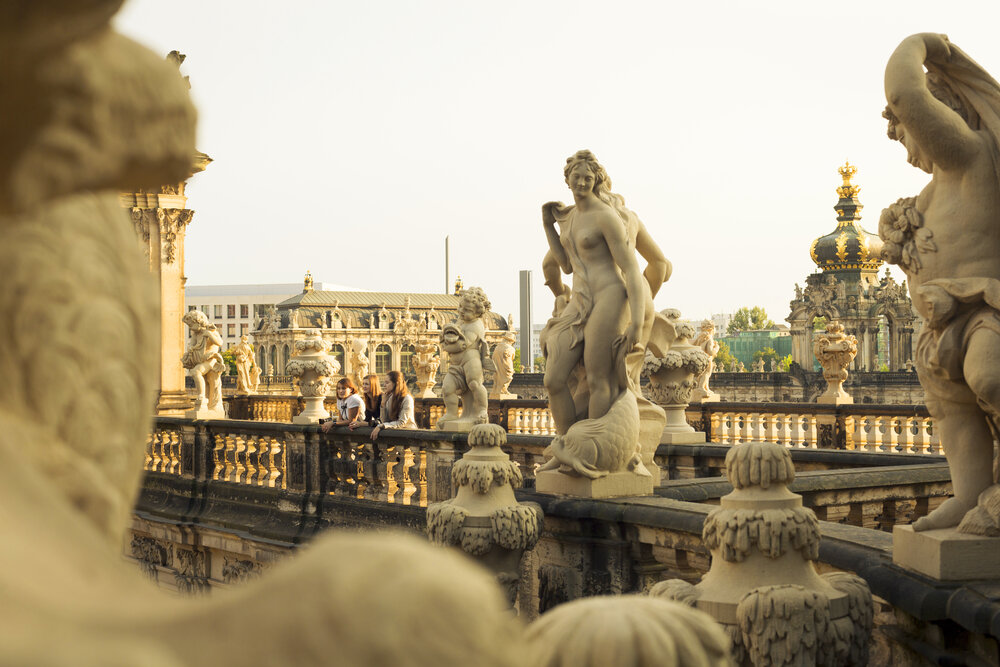
Zwinger Palace Photo: Dresden Travel
Dresden: Baroque and Brilliant — La Firenze dell'Elba, The Florence of the North. If Berlin commands and Hamburg impresses, Dresden enchants — and it does so with a beauty so concentrated and so luminous that it takes the breath away upon first encounter and continues to reward with each successive visit. For the traveler who has ever stood before the Uffizi or wandered the Ponte Vecchio and felt the particular ache that beauty inspires, Dresden will feel immediately familiar, a Northern European echo of that same Renaissance grandeur, filtered through the distinctively German sensibility for order, craftsmanship, and the transcendent power of art. The city's architectural ensemble, gathered along the Elbe in a cascade of Baroque and Rococo splendor, constitutes one of the finest historic cityscapes in all of Europe — a fact that makes Dresden's destruction and subsequent resurrection all the more poignant, and all the more remarkable, for the visitor who knows the history.
And then there is Dresden. If Berlin commands and Hamburg impresses, Dresden enchants. Known as the "Florence on the Elbe," this most Baroque of German cities rises from the banks of the river with a golden-spired magnificence that seems, at first encounter, almost too beautiful to be real — a city that appears to have been composed rather than built, painted rather than planned. Dresden was, before the catastrophic Allied firebombing of February 1945, considered one of the most beautiful cities in all of Europe, a jewel of Saxon culture, art, and architecture whose loss was felt as a wound to civilization itself. What the postwar decades wrought in neglect and division, the years since reunification have devoted to meticulous restoration, and Dresden today stands as one of the great triumphs of heritage preservation in the world — a city reborn not as a replica but as a living testament to the endurance of beauty and the resilience of the human spirit.
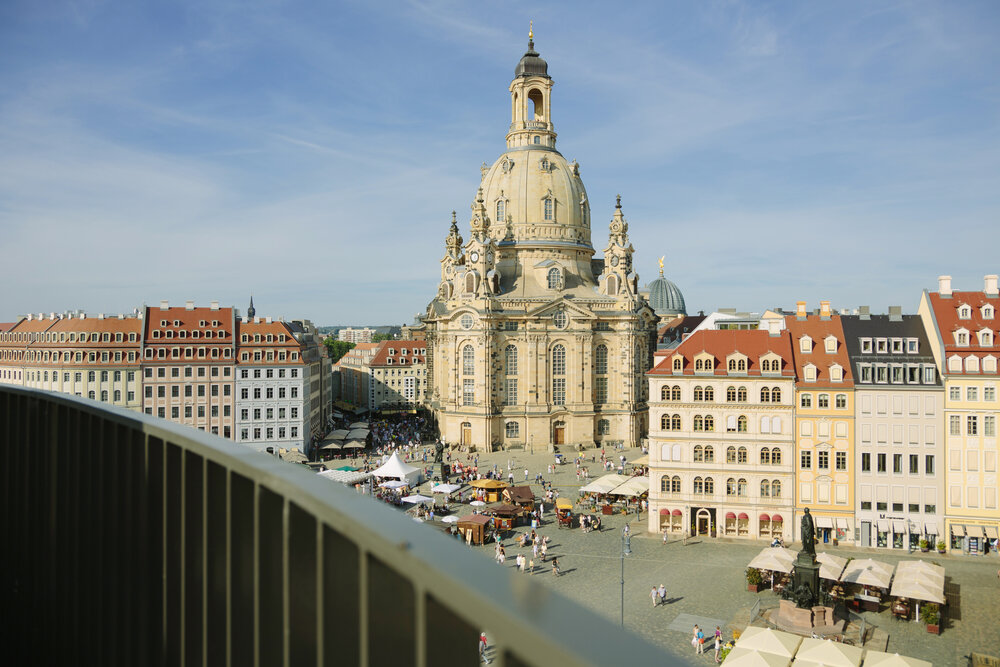
The Frauenkirche Photo: Dresden Travel
The Zwinger Palace, that exquisite ensemble of Baroque pavilions, galleries, and gardens, is the city's crown jewel, housing important collections including the Old Masters Picture Gallery with its Raphael, Rubens, and Vermeer — works before which the serious art lover will want to linger for hours, returning again and again to absorb the full depth of their achievement. The Frauenkirche, the magnificent Lutheran church whose reconstruction from the rubble of 1945 became a global symbol of reconciliation, rises in golden sandstone at the heart of the Neumarkt square, its dome a permanent statement of hope and renewal that can move even the most skeptical observer to something approaching reverence. The Dresden Royal Palace and the Hofkirche Cathedral complete a historic core so architecturally coherent that it feels like inhabiting a painting — a rare and precious experience in a world where urban beauty is too often fragmented and partial. That this ensemble exists at all, given the devastation of the bombing in February 1945, is nothing short of miraculous, a testament to the determination of a city that refused to surrender its beauty.
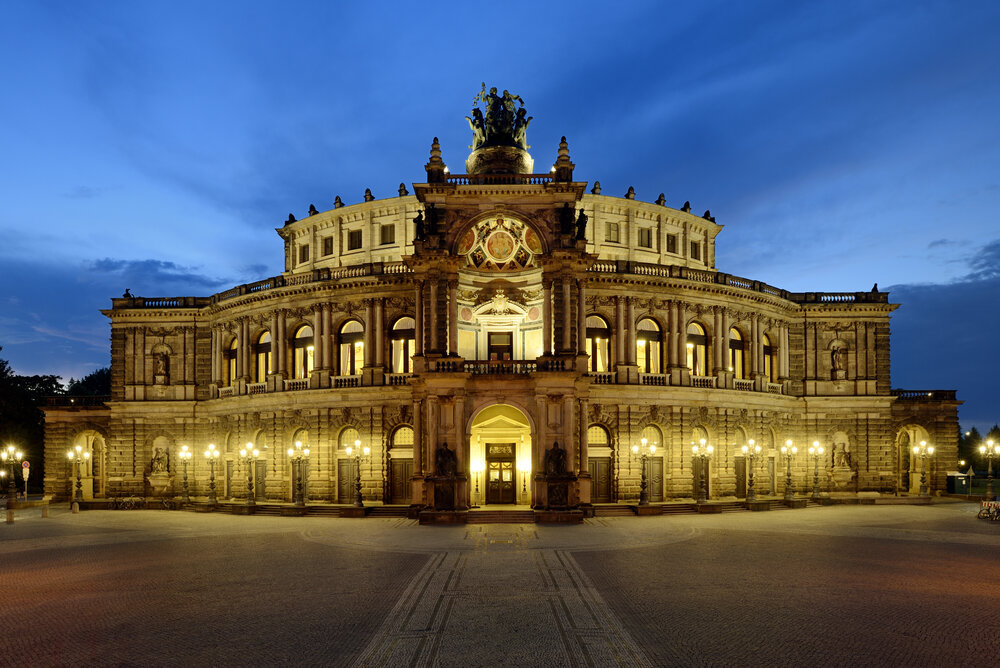
Semperoper Photo: Dresden Travel
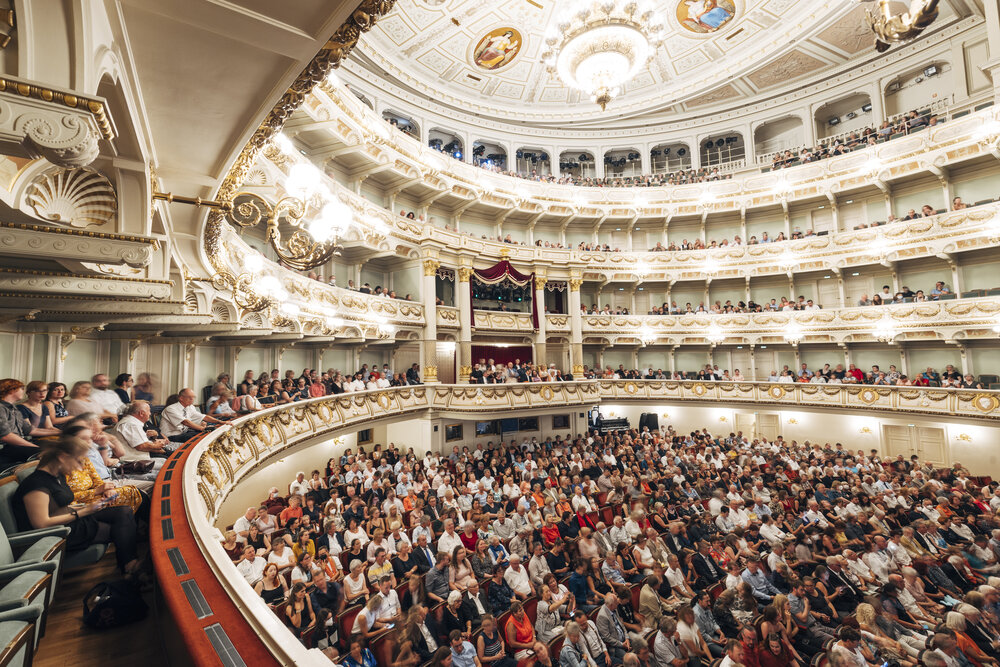
Semperoper Photo: Dresden Travel
And then there is the Semperoper. Built in the mid-19th century and reconstructed after wartime destruction, it is among the most beautiful opera houses in the world, a Neoclassical masterpiece in whose intimate, gilded auditorium Richard Wagner and Richard Strauss premiered some of their greatest works — a lineage of genius that still electrifies the air. I was fortunate enough to receive the singular privilege of a private tour of the opera house, moving through its gilded corridors and storied stage in near-reverential silence, and was then treated to a performance of a contemporary ballet that was nothing short of breathtaking: movement, music, and architecture conspiring together to produce something utterly transcendent. To simply stand before the Semperoper's façade in the golden evening light is already sufficient to stir something deep; to experience it from within, privately, is a gift one does not easily forget — a reminder that the highest achievements of human civilization are not merely to be admired but to be inhabited, however briefly.
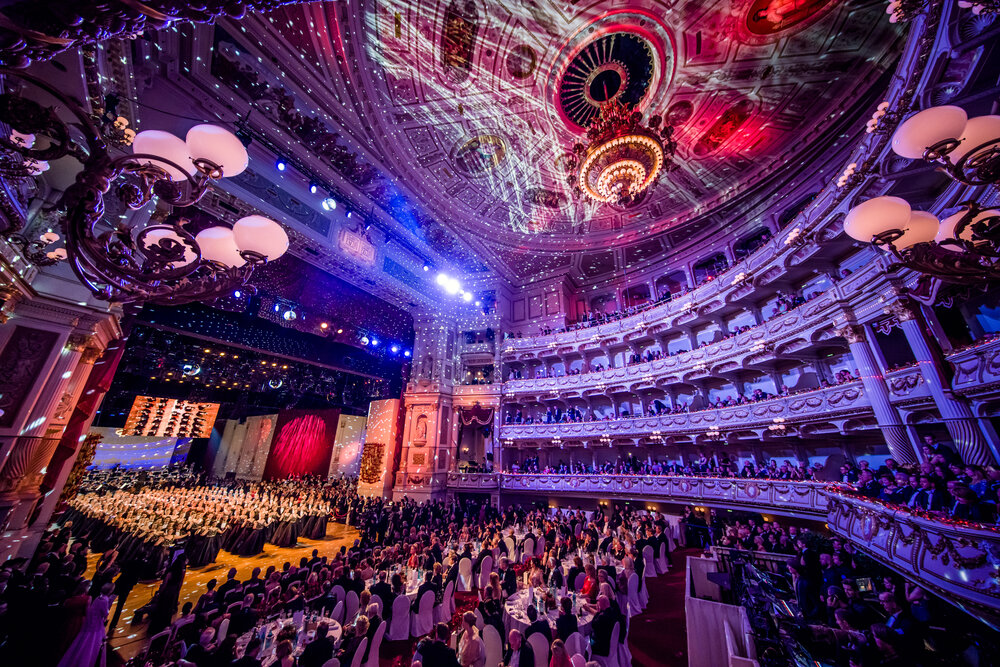
Semperoper Photo: Dresden Travel
Dresden's shopping streets — the Prager Straße and the elegant boutiques of the Altstadt — offer cultured retail therapy of a particularly civilized kind, where browsing feels less like consumption and more like a continuation of the aesthetic education that the city itself provides. For a hipper, more bohemian counterpoint, the Neustadt district across the river delivers independent shops, galleries, and restaurants with an energy and inventiveness that provides a welcome contrast to the Altstadt's grandeur. And the Elbe meadows, stretching languidly along the riverbanks, invite the kind of slow, contemplative strolling that Dresden's spirit demands — a gentle, unhurried movement through space that allows the city's extraordinary beauty to seep into the consciousness rather than assault it. Dresden is a city that teaches you how to look, and once it has taught you, you carry that knowledge with you to every subsequent destination, seeing the world with eyes that have been, however briefly, refined.
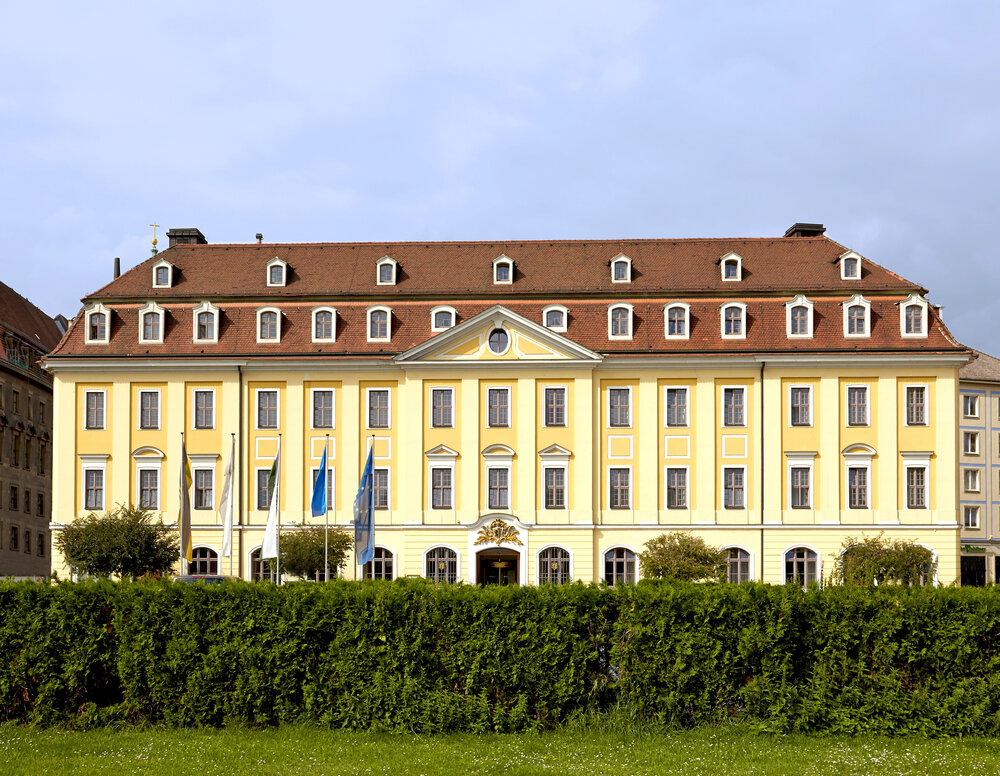
Gewandhaus Hotel Photo: Gewandhaus Hotel
The Gewandhaus Hotel: Elegance, Cake, and Creatures Most Unexpected — Dresden's finest hotel is a place of delightful surprises, a property that combines impeccable taste with a spirit of playful irreverence that feels perfectly attuned to the city it calls home. For the traveler who values both luxury and character, the Gewandhaus offers an experience that is richly rewarding and unexpectedly charming, a stay that will produce stories worth telling long after the journey has ended. In a city that itself combines the grand and the whimsical — the sublime and the surprising — the Gewandhaus is a perfectly faithful reflection of Dresden's own character, offering not merely accommodation but an experience that deepens one's understanding and affection for the city outside its walls. It is the rare hotel that makes you love a city more, and the Gewandhaus accomplishes this with a consistency and charm that is genuinely rare.
I was magnificently lodged at the Gewandhaus Hotel Dresden, a property whose location is simply unimprovable: steps from the Altstadt's great landmarks, a short stroll from the Semperoper, and perfectly positioned for the city's finest shopping streets. The hotel occupies a beautifully restored historic building and carries its heritage with graceful confidence, offering public spaces of quiet luxury, rooms of genuine comfort and understated elegance, and a level of service that feels personal rather than performative — the kind of attentive, warm hospitality that comes not from a training manual but from a genuine desire to make each guest's stay exceptional. It is, in short, exactly the kind of hotel that the discerning traveler hopes to find and too rarely does — a property that understands that true luxury is not a matter of thread count or marble but of the quality of care extended to every guest, and the sincerity with which it is offered.
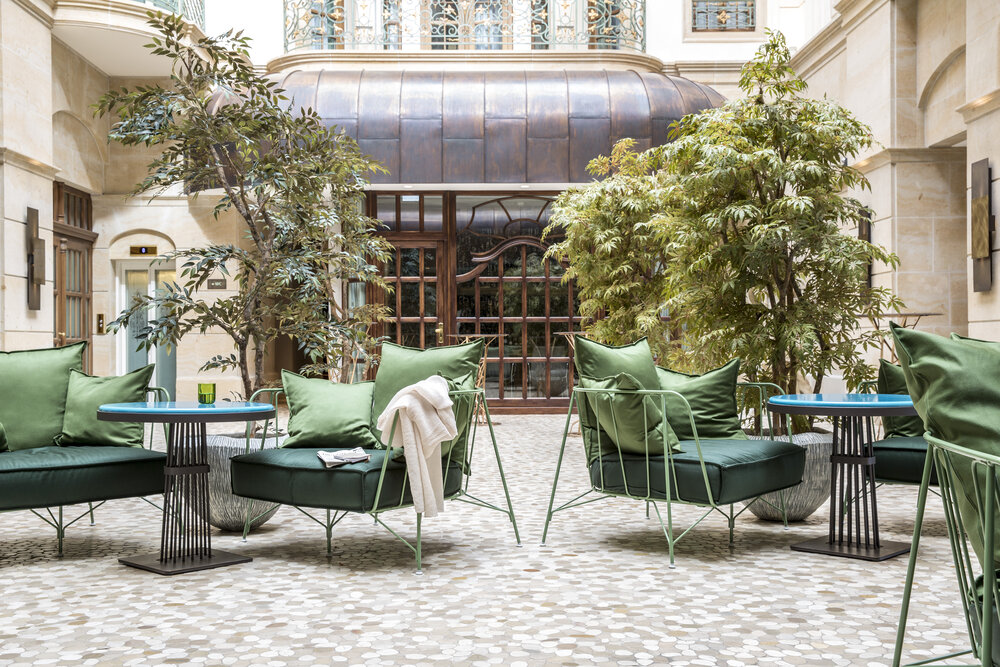
Gewandhaus Hotel Atrium Photo: Gewandhaus Hotel
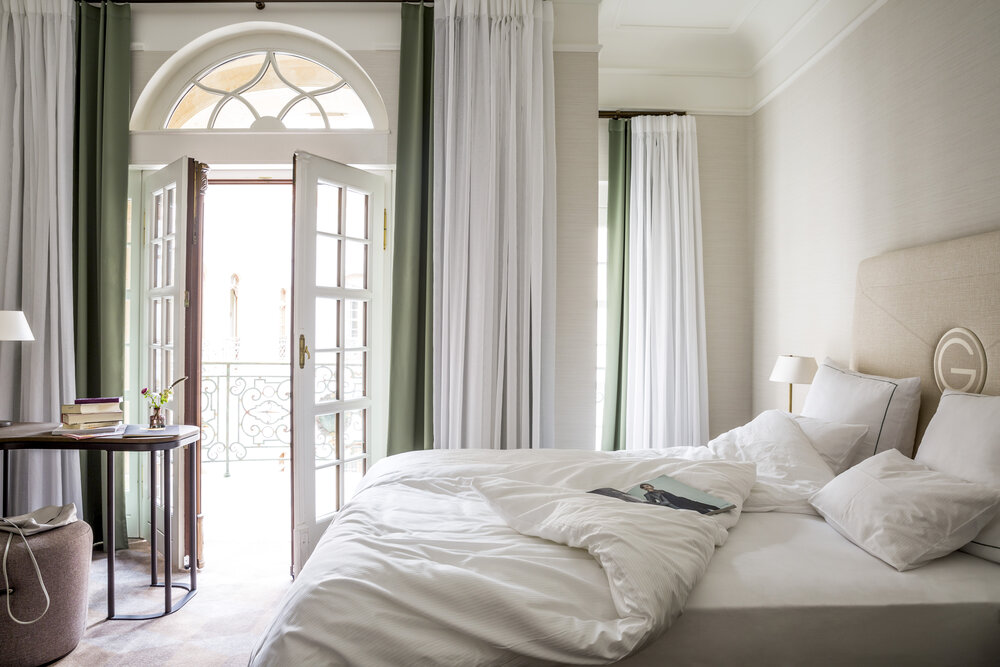
Gewandhaus Hotel Room Photo: Gewandhaus Hotel
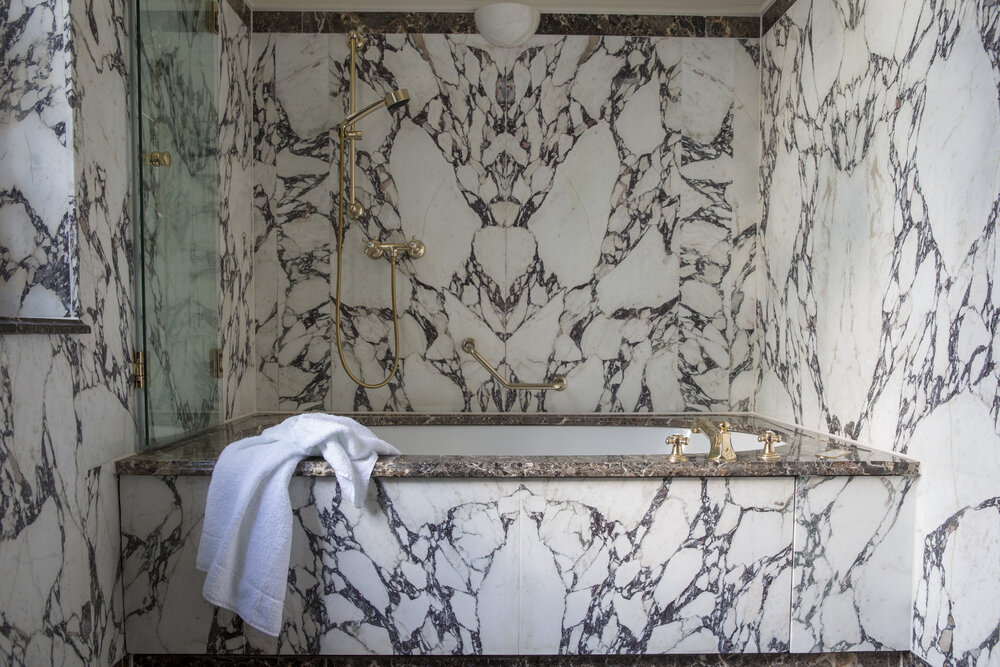
Gewandhaus Hotel Marble Bath Photo: Gewandhaus Hotel
The spa and pool area deserves a mention all its own, for it is one of the more delightfully whimsical discoveries one can make in a luxury hotel — a space that embodies the German talent for combining rigorous quality with a strain of humor that catches the visitor agreeably off guard. The indoor pool is presided over by a cast of life-sized sculptural zoo animals deployed as lifeguards, a hippopotamus and a crocodile among them, their ceramic authority over the waters lending the space a playful surrealism that somehow, perfectly, suits the spirit of Dresden. One swims with a smile, and the memory of that smile persists long after the chlorine has faded, a small but vivid pleasure that distinguishes the Gewandhaus from every other impeccably appointed hotel in Europe. It is a detail that tells you something important about the hotel's philosophy: that it takes comfort seriously but not solemnly, and that it understands the value of surprise and delight in a world of luxury that can sometimes feel interchangeably earnest.
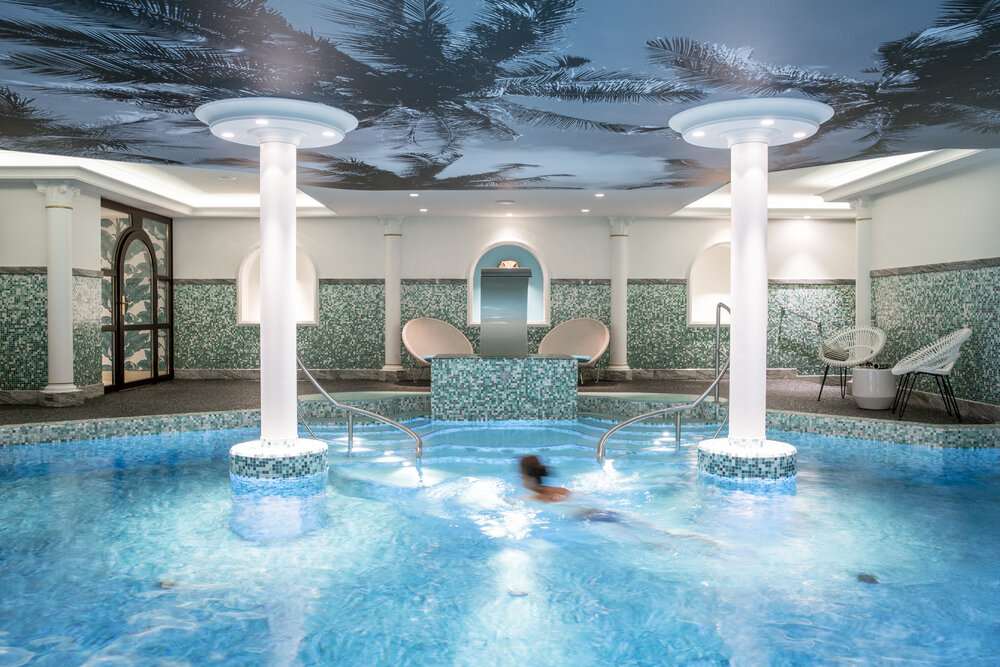
Gewandhaus Hotel Indoor Pool Photo: Gewandhaus Hotel
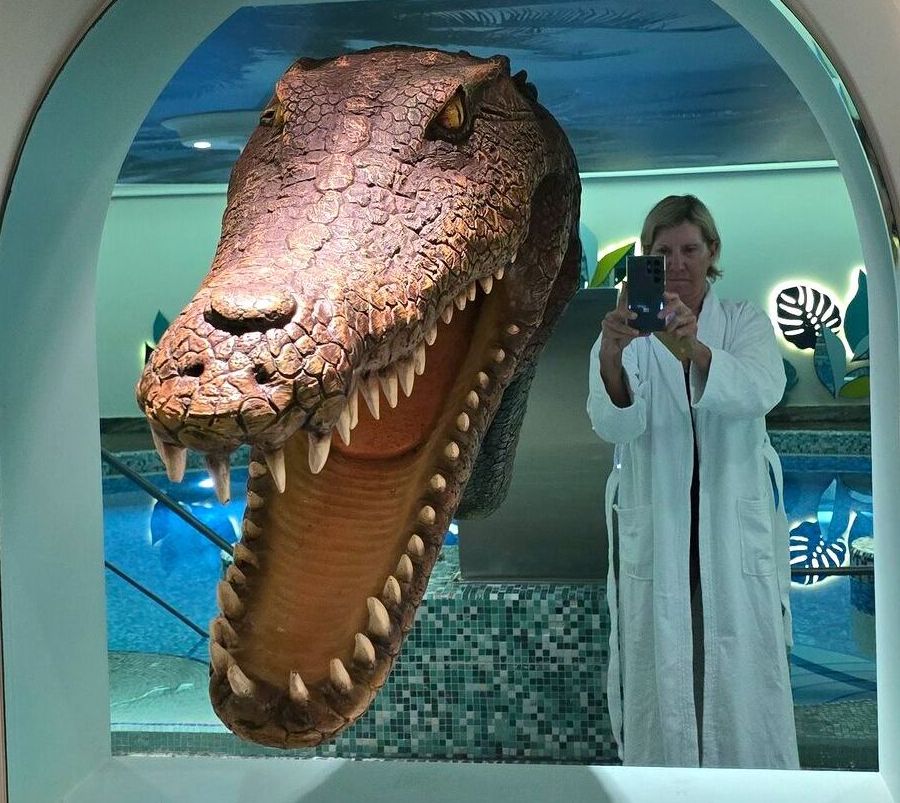
Gewandhaus Hotel Pool Lifeguard Photo: Hope Gainer
What I found most delicious, and most Dresden, was the hotel's celebrated cake selection, a rotating cast of extraordinary tortes, slices, and confections that demanded daily investigation with an urgency that I made no effort to resist. Dresden has a deep and serious relationship with the art of the Konditorei that extends back centuries, and the Gewandhaus honors that tradition magnificently, offering desserts that are not merely afterthoughts but genuine works of pastry art — each one a small, perfect expression of the city's conviction that beauty and pleasure are not indulgences but necessities. One does not simply have coffee here; one has an occasion. I cannot, in good conscience, recommend the hotel without also recommending that you arrive with a sweet tooth and leave with plans to return — for the cake alone would justify the journey, and the hotel's presentation of it elevates a simple pleasure into something approaching the sublime.
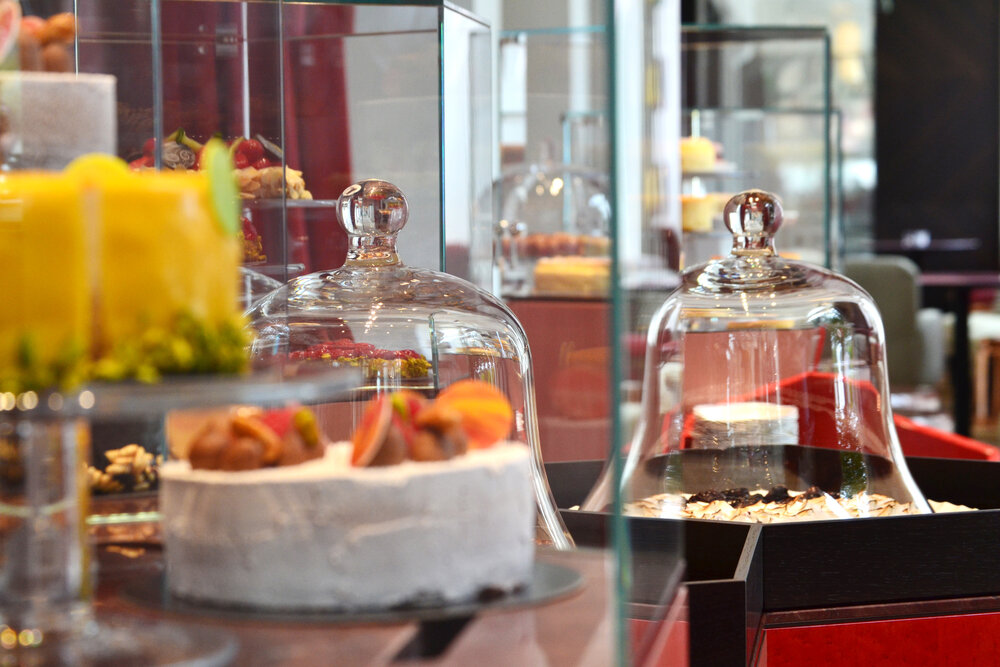
Gewandhaus Hotel Signature Cakes Photo: Gewandhaus Hotel
Three Points on the Map — Worlds Apart in the Soul. To travel Germany's great cultural triangle is to discover that geographical proximity and spiritual kinship are not the same thing — and that this is, paradoxically, what makes the journey so endlessly rewarding. Berlin, Hamburg, and Dresden are cities that share a nation but not a temperament, a language but not a dialect, a history but not a relationship to that history. It is precisely this divergence that makes the triangle so compelling for the thoughtful traveler, offering three distinct and irreplaceable perspectives on what it means to be German, and, by extension, what it means to be human. To move between them is to witness the extraordinary range of expression that a single culture can contain — from the raw creative energy of Berlin to the refined confidence of Hamburg to the luminous artistic devotion of Dresden, each city a chapter in a larger story that cannot be fully understood from any single vantage point.
The train rides connecting these three cities are, by European standards, brief. A few hours of comfortable, scenic rail travel and you move from one point of the triangle to the next, luggage rolling smoothly beside you, a coffee in hand, the German countryside unspooling past the window in a panorama of rolling hills, dense forest, and half-timbered villages that seems almost deliberately designed to ease the transition from one urban personality to the next. By any objective measure, Berlin, Hamburg, and Dresden are neighbors. By every subjective one, they are worlds apart — and it is this paradox, this tension between proximity and difference, that gives the journey its distinctive intellectual and emotional texture. The German rail system, with its characteristic precision and comfort, makes the transitions not merely painless but pleasurable, each journey a small meditation on the relationship between landscape and culture that unfolds between departure and arrival.
Berlin is electric, a city that never quite sleeps, never quite settles, where history and the future are in perpetual, exhilarating negotiation — a place that rewards the visitor who is willing to be surprised, challenged, and occasionally overwhelmed. Hamburg is assured, a city of maritime elegance and ambitious modernity, where old money meets new architecture and the harbor light turns everything golden — a place that satisfies the visitor who appreciates the finer things and the quiet confidence with which they are offered. Dresden is transcendent, a city of extraordinary beauty and quiet dignity, where the phoenix of culture has risen, with particular magnificence, from genuine ash — a place that moves the visitor in ways that are difficult to articulate but impossible to forget. Each city occupies its own emotional register, its own aesthetic universe, and to experience all three is to understand that Germany itself is not one thing but many — a nation whose complexity can only be appreciated through direct, unhurried encounter.
To travel Germany's great triangle is to understand that a country, like a person, cannot be known through a single encounter. It must be circled, approached from different angles, and considered in different lights — its contradictions embraced rather than resolved, its complexities savored rather than simplified. And for those of us lucky enough to carry even a thread of German heritage within us, these three cities offer something beyond the pleasures of travel: they offer the ineffable satisfaction of coming, in some small and luminous way, home — a homecoming that surprises you, one you did not know you were making until the moment it arrives, and that stays with you long after the last train has departed and the last cathedral spire has faded from view. It is, finally, the gift of self-knowledge — the understanding that to travel well is not merely to see the world but to see oneself more clearly within it, reflected in the particular mirror that each of these remarkable cities holds up to the traveler who arrives with eyes and heart open.
Folio · Atlas · 10°30'00"S 22°06'36"W · Platinum Tier
There is a particular kind of homecoming that surprises you, one you did not know you were making until the moment it arrives — a sudden, overwhelming sense of recognition that transcends the ordinary pleasures of…
— Club ledger, June 8, 2026, archive no. 5847